












Overview
A misbehaving browser is often caused by an extension, theme, or corrupted setting. Running it in a "safe mode" — with extensions and customizations disabled — helps you find the cause. Firefox has a built-in Troubleshoot Mode; other browsers use a private window (which disables extensions by default) or a clean profile. This guide covers each.
Running a browser without extensions helps isolate problems.
Key Takeaways
- Most Chromium browsers have no true safe mode — a private/incognito window disables extensions.
- Firefox has a real Troubleshoot Mode that disables add-ons and resets some settings temporarily.
- If the problem disappears in safe mode, an extension or setting is the cause.
- Re-enable extensions one at a time to find the culprit.
Google Chrome
1. Open Chrome and press Ctrl + Shift + N to open an Incognito window.
2. Incognito disables extensions by default, mimicking a safe mode.
3. Alternatively, disable all extensions at chrome://extensions, or create a new profile to test a clean setup.
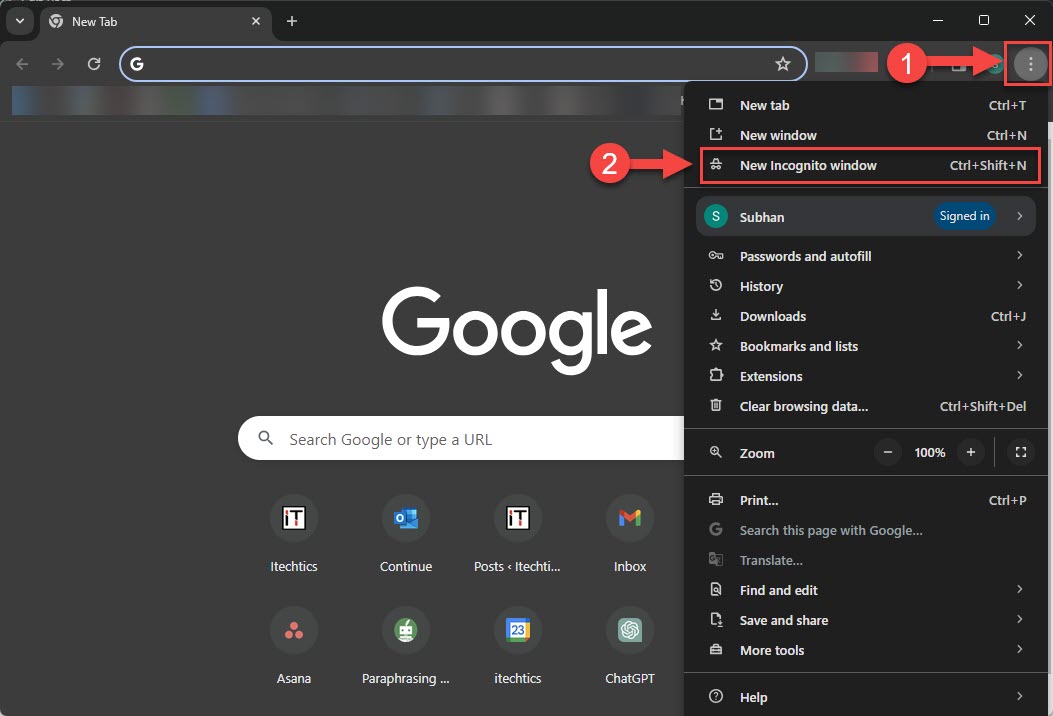
An Incognito window in Chrome runs without extensions.
Mozilla Firefox (Troubleshoot Mode)
1. Click the menu (three lines) > Help > Troubleshoot Mode.
2. Confirm Restart, then click Open in the dialog.
3. Firefox restarts with add-ons disabled and some settings reset for the session.
4. Exit by restarting Firefox normally.
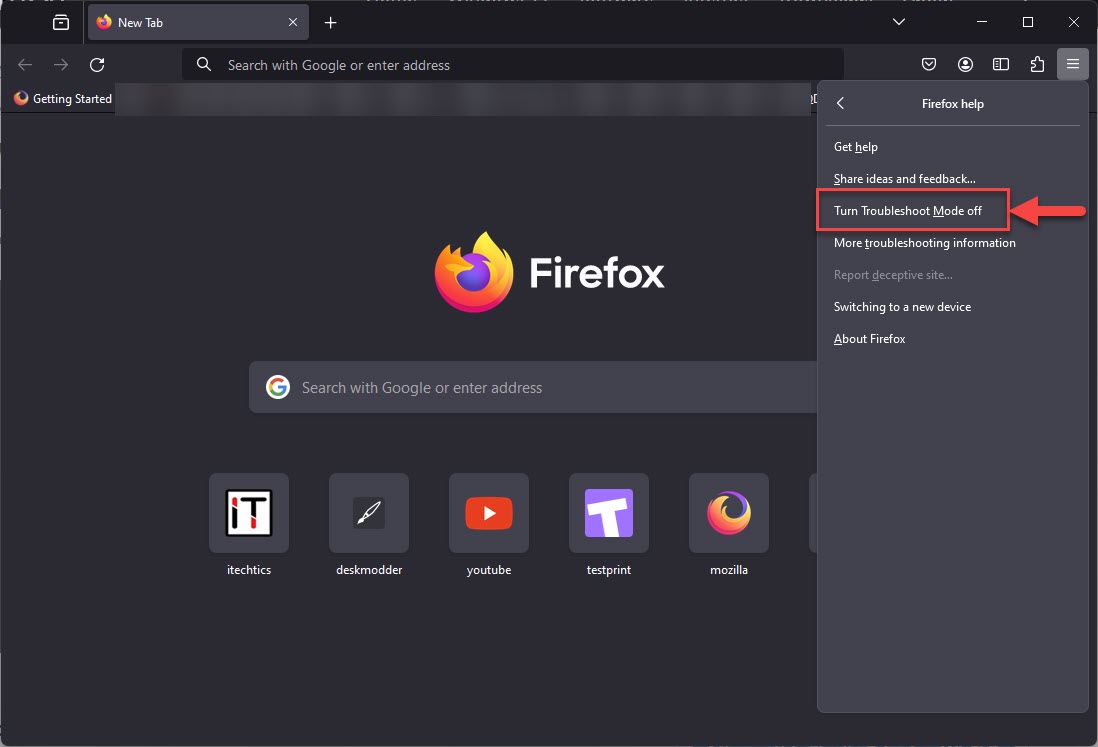
Exit Firefox Troubleshoot Mode by restarting normally.
Microsoft Edge
1. Open Edge and press Ctrl + Shift + N to open an InPrivate window.
2. Extensions are disabled by default in InPrivate (unless explicitly allowed).
3. Or disable extensions at edge://extensions to test.
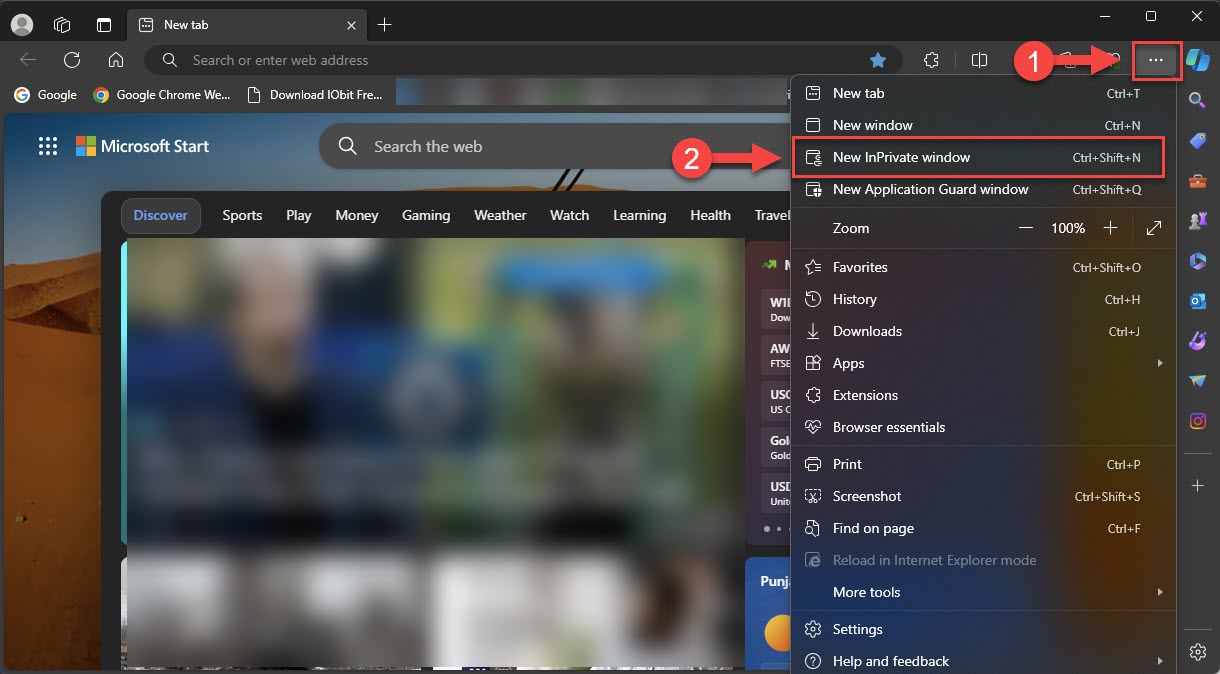
An InPrivate window in Edge runs without extensions.
Opera, Vivaldi, and Brave
- Open a private window (Ctrl + Shift + N) — extensions are disabled by default.
- Or turn off extensions in the browser’s extensions page.
- Brave: a private window disables extensions; test there to isolate issues.
Troubleshooting
Problem: The problem persists even in safe mode.
Solution: It is not an extension. Clear the cache, reset the browser settings, or test a brand-new profile.
Problem: An extension is the cause.
Solution: In normal mode, disable all extensions, then re-enable them one at a time to find which breaks the browser.
Problem: You can only browse in safe mode.
Solution: A corrupted profile or extension is at fault. Reset the browser, create a new profile, and reinstall problematic extensions.
Problem: Incognito still loads an extension.
Solution: Some extensions are allowed in private mode. Turn off "Allow in Incognito/InPrivate" for that extension to fully test.
Conclusion
To troubleshoot a browser, run it without extensions: Firefox’s Troubleshoot Mode or a private/incognito window elsewhere. If the issue vanishes, an extension or setting is to blame — re-enable them one by one to pinpoint it.
</w:pBdr><w:spacing w:before="220" w:after="40"/></w:pPr><w:r><w:rPr><w:b/><w:bCs/><w:color w:val="0B5394"/><w:sz w:val="21"/><w:szCs w:val="21"/><w:rFonts w:ascii="Calibri" w:cs="Calibri" w:eastAsia="Calibri" w:hAnsi="Calibri"/></w:rPr><w:t xml:space="preserve">About TechHub
This guide is part of the TechHub Knowledge Base. For more step-by-step IT guides and support, visit techhub.com.lk.