












Overview
Knowing your PC’s hardware specs helps with upgrades, software requirements, and troubleshooting. Windows has several built-in tools to reveal your CPU, GPU, RAM, storage, and motherboard. This guide covers each.
Windows tools reveal your CPU, GPU, RAM, drive, and motherboard.
Key Takeaways
- System Information (msinfo32) gives a complete hardware overview.
- Task Manager’s Performance tab shows CPU, GPU, RAM, and disk details live.
- DxDiag is great for CPU and GPU info.
- Command Prompt/PowerShell can pull specific details like the motherboard model.
Quick Overview — Settings and System Information
1. Open Settings > System > About for processor, RAM, and system type.
2. For full detail, press Windows key + R, type msinfo32, and press Enter.
3. System Information lists the CPU, RAM, BIOS/motherboard, and more in one place.
Check the CPU (Processor)
1. Task Manager (Ctrl + Shift + Esc) > Performance > CPU shows the model, cores, and speed.
2. Or run dxdiag and read the Processor on the System tab.
3. Settings > System > About also shows the processor.
Check the GPU (Graphics Card)
1. Open Device Manager > Display adapters to see the GPU model.
2. Task Manager > Performance > GPU shows the model and video memory.
3. dxdiag > Display tab shows the GPU and driver.
Check the RAM (Memory)
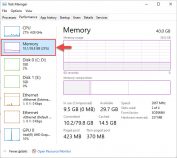
1. Task Manager > Performance > Memory shows total size, speed, slots used, and form factor.
2. PowerShell: Get-CimInstance Win32_PhysicalMemory | Select Capacity,Speed gives per-module detail.
3. Settings > System > About shows installed RAM.
Check the Storage (Hard Drive/SSD)
1. Open Settings > System > Storage, or Disk Management (diskmgmt.msc) for partitions.
2. Task Manager > Performance > Disk shows the drive model and type.
3. System Information > Components > Storage lists drives in detail.
Check the Motherboard
1. System Information shows BaseBoard Manufacturer/Product.
2. Command Prompt: wmic baseboard get product,Manufacturer (or the PowerShell CIM equivalent: Get-CimInstance Win32_BaseBoard).
3. For BIOS: msinfo32 shows the BIOS version/date.
Troubleshooting
Problem: GPU shows as Basic Display Adapter.
Solution: Install the proper graphics driver; the generic driver hides the real GPU details.
Problem: wmic does not work.
Solution: WMIC is deprecated on newer Windows; use Get-CimInstance in PowerShell instead.
Problem: I need the exact model for an upgrade.
Solution: Use CPU-Z (third-party) for full SPD/motherboard detail, or check the manufacturer’s specs by service tag/model.
Problem: RAM speed looks low.
Solution: Enable XMP/EXPO in BIOS to run RAM at its rated speed; Task Manager shows the current operating speed.
Conclusion
Windows gives you everything you need to identify your hardware: System Information for the full picture, Task Manager for live details, and DxDiag or PowerShell for specifics. Use them before any upgrade or compatibility check.
</w:pBdr><w:spacing w:before="220" w:after="40"/></w:pPr><w:r><w:rPr><w:b/><w:bCs/><w:color w:val="0B5394"/><w:sz w:val="21"/><w:szCs w:val="21"/><w:rFonts w:ascii="Calibri" w:cs="Calibri" w:eastAsia="Calibri" w:hAnsi="Calibri"/></w:rPr><w:t xml:space="preserve">About TechHub
This guide is part of the TechHub Knowledge Base. For more step-by-step IT guides and support, visit techhub.com.lk.